If you were to perform this search (we strongly advise against doing so without clear legal authorization), you would receive a list of URLs similar to:
Clicking on one of these links would, in many cases, open a web page displaying a live or refreshable JPEG image from a security camera. In the past, searchers have reported seeing footage ranging from empty warehouses and parking lots to more sensitive locations like retail point-of-sale systems, laboratory clean rooms, and even private residences.
Some cameras also include PTZ (pan-tilt-zoom) controls on the same page, allowing a remote viewer to physically move the camera.
The technology behind accessible camera feeds involves IP cameras, which are connected to the internet and can stream video feeds directly to a web interface. These cameras are often used for security and surveillance purposes in homes, businesses, and public spaces. The web interface for accessing the camera feed can be as simple as an "index.shtml" page that provides a live view or recorded footage.
If you do not need external access, block port 80, 443, 554 (RTSP), and 21 (FTP) at your firewall.
Warning: Accessing a camera feed without explicit permission is illegal in most jurisdictions under computer misuse laws (e.g., CFAA in the US, Computer Misuse Act in the UK). This write-up is for educational and defensive purposes only. Never use this dork to spy on or harm others.
The inurl:view index.shtml camera query is merely a symptom of a much larger disease: the rush to connect everything to the internet without building security into the product lifecycle.
We live in an era where a $20 smart bulb, a $50 baby monitor, and a $100 security camera all run miniature web servers. A surprising number of them respond to search queries like the one above. As consumers, we demand convenience and low prices. As a result, manufacturers skip essential security steps like requiring password changes on first login or disabling remote access by default.
Until regulations (like the UK’s PSTI Act or California’s SB-327) force a change, the digital backdoor labeled inurl:view index.shtml camera will remain open, waiting for the next curious (or malicious) searcher to walk through.
Disclaimer: This article is for educational and security awareness purposes only. Unauthorized access to computer systems, including IP cameras, is a crime. Always obtain explicit permission before testing any device you do not own.
The search query you provided, inurl:view/index.shtml camera, is a classic "Google Dork" used to find unsecured, publicly accessible IP security cameras indexed on the internet.
Below is an objective, educational article discussing what these search operators are, how they expose vulnerable internet-of-things (IoT) devices, and how users can protect their own hardware.
Beyond the Search Bar: How "Google Dorks" Expose Vulnerable IoT Cameras
In the vast landscape of cybersecurity, some of the most potent tools do not require complex coding or expensive software. Sometimes, all it takes is a simple string of text entered directly into a standard search engine.
Advanced search operators—popularly known in the security world as "Google Dorks"—are specialized search queries that help users filter through massive amounts of indexed data to find specific file types, server directories, or URL structures. While incredibly useful for researchers, they also serve as a stark reminder of how easily unsecured Internet of Things (IoT) devices can be exposed to the public. Understanding the Anatomy of a "Dork"
To understand how a search string like inurl:view/index.shtml camera works, it helps to break down what the search engine is actually looking for:
inurl: This operator tells the search engine to only show results where the specified text appears directly inside the website's URL.
view/index.shtml This is a specific file path and extension commonly used in the default web interfaces of older or specific brands of IP network cameras.
camera This simply narrows the results to pages containing the word "camera" to ensure accuracy.
When a user strings these together, the search engine does exactly what it is designed to do: it fetches every publicly indexed page on the internet that matches that exact directory structure. The result is often a list of live streaming feeds from parking lots, warehouses, retail stores, or even private residences where the installer neglected to secure the device. The IoT Security Gap
Why are these cameras showing up on public search engines in the first place? The issue rarely stems from a failure of the search engine, but rather from a failure of device configuration.
When many consumers and small businesses buy IP (Internet Protocol) cameras, the setup process can be deceptively simple. To view the camera feed remotely from a phone or outside network, the camera must be accessible via the internet. However, many users skip critical security steps during this process:
Default Credentials: Many devices ship with generic default usernames and passwords (like "admin" and "1234"). If these are not changed, anyone who finds the login page can take control of the camera.
Anonymous Viewing Enabled: Some older or budget network cameras have an "allow anonymous viewing" feature enabled by default. This allows anyone to bypass the login screen entirely and jump straight to the live video index page.
Lack of Firewalls and Port Forwarding Risks: To make remote viewing easier, users often open network ports directly to the device without setting up a Virtual Private Network (VPN) or proper firewall restrictions. How to Protect Your Own Devices
If you own web-connected security cameras, baby monitors, or smart home hubs, keeping them off public search indices requires proactive maintenance. Cybersecurity experts recommend several immediate steps to lock down hardware:
Change Default Passwords Immediately: Never leave the factory-set password on your camera. Create a strong, unique password that cannot be easily guessed. Inurl View Index.shtml Camera
Disable Guest or Anonymous Access: Scrutinize your camera's settings and ensure that the feature allowing public or anonymous viewing is strictly turned off.
Keep Firmware Updated: Manufacturers frequently release security patches to close vulnerabilities. Check your camera manufacturer's website regularly or enable automatic updates.
Avoid Direct Port Forwarding: Instead of opening your camera directly to the internet, use the secure cloud applications provided by reputable manufacturers, or set up a secure VPN to access your home network remotely. Conclusion
The ability to find exposed cameras via simple search terms highlights a fundamental rule of the digital age: if a device is connected to the internet, it is actively being scanned. Advanced search operators are not inherently malicious; they are neutral tools that reflect the current state of internet security. For consumers and businesses alike, the responsibility lies in ensuring that our private spaces do not accidentally become public broadcasts.
To help me tailor any additional information for you, are you looking to secure your own camera network, or are you researching search engine dorking for cybersecurity educational purposes?
The history of this query is a cautionary tale about the early days of the "Internet of Things" (IoT) and the lack of default security in consumer hardware. Google Dorks | Group-IB Knowledge Hub
The fluorescent lights of the server room hummed as Elias typed the string into the search bar: inurl:view/index.shtml
He wasn’t a malicious hacker, just a "digital urban explorer." Most of what he found was mundane: a silent, empty warehouse in Ohio; a rain-slicked parking lot in Brussels; a breakroom in a dental clinic where a forgotten coffee pot sat cold. Then, he clicked a link that didn't have a location tag.
The feed flickered to life. It was a high-angle shot of a small, cluttered apartment. A woman sat at a desk, her back to the camera, typing furiously. Elias watched, a strange knot forming in his stomach. He was about to close the tab—invasion of privacy felt different when it was someone’s home—when he noticed the woman’s monitor on the feed. She was looking at a grid of security camera streams.
Elias leaned in, his nose nearly touching his screen. He recognized the top-left feed: it was the Ohio warehouse. The top-right was the Brussels parking lot. In the bottom-right corner of
screen was a feed of a dark room with a single glowing monitor. A man was sitting there, his face illuminated by the blue light, staring at a search result page. The man in the feed was Elias.
A notification pinged on his own desktop. A small chat window opened in the center of his screen. It was from an "Admin" on the index.shtml "Stop looking for the cracks in the world," the message read. "You might fall through one."
Before he could react, the woman in the video slowly turned around. She didn't look at her keyboard or her monitors. She looked straight up into the lens of the camera Elias was watching through, and she smiled.
His screen went black. When he tried to refresh, the URL returned a 404 error. Elias sat in the dark, the silence of his room suddenly feeling very heavy, wondering if the camera on his own monitor was still glowing green. Should we explore a
where Elias tries to track down the woman, or would you like to pivot to a different tech-noir
Searching for inurl:view/index.shtml is a classic example of Google Dorking
, a technique that uses advanced search operators to find specific web pages or vulnerabilities that aren't typically meant for the public.
This particular query specifically targets the web interface of Axis network cameras Why This Works The search string inurl:view/index.shtml
looks for websites where that exact file path is part of the URL. This path is the default landing page for older or unconfigured Axis cameras. When these cameras are connected to the internet without proper password protection or firewall rules, Google’s bots index their live feeds just like any other website. What Users Find Live Feeds
: Real-time video from various locations, including city streets, construction sites, and sometimes private businesses or homes. Camera Controls
: In some cases, the interface allows users to pan, tilt, or zoom (PTZ) the camera remotely. Geographic Variety
: Results often show cameras from all over the world, categorized by the IP address's country of origin.
The "Inurl View Index.shtml Camera" Phenomenon: A Look into Online Camera Vulnerabilities
The internet has made it easier than ever to access and view live camera feeds from around the world. However, this convenience has also led to a rise in security vulnerabilities, particularly with regards to IP cameras. One such vulnerability is related to the phrase "inurl view index.shtml camera," which has been making rounds in the cybersecurity community.
What does "inurl view index.shtml camera" mean?
"Inurl" is a search term used by hackers and security researchers to find specific URLs (Uniform Resource Locators) that contain certain keywords. In this case, "inurl view index.shtml camera" refers to a search query that looks for IP cameras with a specific URL pattern. If you were to perform this search (we
The Vulnerability
The vulnerability lies in the fact that some IP camera models, particularly those manufactured by certain Chinese companies, use a default URL pattern to display their live feeds. This pattern often includes the string "index.shtml" followed by specific parameters that allow users to view the camera feed.
When a user searches for "inurl view index.shtml camera," they are essentially looking for IP cameras that have not been properly secured and are still using their default URL patterns. This can lead to a plethora of security issues, including:
How to Protect Your IP Camera
To protect your IP camera from such vulnerabilities, follow these best practices:
Conclusion
The "inurl view index.shtml camera" phenomenon highlights the importance of securing IP cameras and other IoT devices. By taking simple steps to secure your devices and keeping up with the latest security best practices, you can protect yourself from potential security threats.
Additional Tips
By staying informed and taking proactive measures, you can ensure the security and integrity of your IP camera and prevent potential security breaches.
The search query inurl:view/index.shtml camera is a well-known Google Dork used to find publicly accessible IP security camera web interfaces. This specific dork targets the directory structure and file naming conventions commonly used by older network cameras, such as those from AXIS. Query Breakdown
inurl:: A Google search operator that restricts results to URLs containing the specified string.
view/index.shtml: The typical path for the live view interface of certain IP camera brands.
camera: A keyword to filter for devices identifying themselves as cameras in the page content or title. Security Risks and Vulnerabilities
Devices appearing in these search results are often exposed due to misconfiguration.
Unauthorized Access: Many of these cameras are not protected by a password, allowing anyone with the URL to view live feeds remotely.
Privacy Violations: Sensitive areas like private homes, businesses, or public bars (e.g., the Sand Bar in Kansas) can be unintentionally broadcast to the internet.
Lateral Network Movement: Compromised cameras can serve as a "stepping stone" for attackers to gain access to the owner's internal network.
Botnet Recruitment: Unsecured cameras are frequently targeted by malware like Mirai to build botnets for large-scale DDoS attacks. Recommended Mitigations
To prevent IP cameras from being indexed and accessed by unauthorized users:
Enable Strong Authentication: Never leave a camera on its default credentials; use a unique, complex password.
Disable Port Forwarding and UPnP: Instead of exposing the camera directly to the internet, use a VPN for secure remote access.
Update Firmware Regularly: Manufacturers release updates to patch security vulnerabilities that dorking queries exploit.
Use HTTPS: Ensure the web interface uses encrypted connections to prevent credentials from being intercepted in transit.
Network Segmentation: Place security cameras on a separate VLAN or network from sensitive personal devices like computers and printers.
The search query inurl:view/index.shtml camera is a well-known Google Dork used to discover publicly accessible Axis network cameras What This Query Does
This specific search string instructs Google to look for web pages where the URL contains the path /view/index.shtml Clicking on one of these links would, in
. This path is the default public interface for many IP cameras and video encoders manufactured by Axis Communications
: It returns a list of live video feeds from cameras around the world that have been connected to the internet without a password or proper security configuration. Security Risk
: Finding these cameras is often cited in cybersecurity articles to highlight the importance of setting strong passwords and securing IoT devices. Related Camera Search Dorks
Hackers and security researchers use similar queries to find other types of unsecured hardware: intitle:"Live View / — AXIS" : Finds the title of the Axis web interface. inurl:"ViewerFrame? Mode= : Targets older video server frames. intitle:"snc-z20" inurl:home/ : Used to find specific Sony network camera models. Protecting Your Own Camera If you own a network camera, ensure it is not indexed by: Setting a Password
: Most cameras are indexed because they use default credentials or have no password at all. Disabling Public Access : Ensure the camera is behind a or requires a VPN to access. Regular Updates
: Keep the camera's firmware updated to patch known vulnerabilities. cdn.prod.website-files.com of IP camera? Inurl View Index Shtml 14 - Facebook
The search query inurl:view/index.shtml camera is a well-known "Google Dork" used to find publicly accessible, often unsecured, IP cameras—specifically those manufactured by Axis Communications.
While it might be tempting to use these dorks for "geocamming" or virtual tourism, accessing these feeds can raise significant ethical and legal concerns regarding privacy. 🛠️ What are Google Dorks?
Google Dorking (or Google Hacking) involves using advanced search operators to find information that isn't typically indexed for general users.
inurl:: Restricts results to pages containing the specified string in their web address.
index.shtml: A common filename for the default viewing page of many older or specific IP camera brands. 📹 Common Camera Dorks
Security researchers often use these strings to identify vulnerable devices and notify owners. Common variations include:
intitle:"Live View / - AXIS": Specifically targets Axis network cameras.
inurl:ViewerFrame?Mode=Refresh: Often reveals Panasonic network cameras.
inurl:axis-cgi/mjpg: Finds cameras streaming in Motion-JPEG format. 🛡️ Why This is a Security Risk
Many of these cameras are discovered because they use default credentials (like admin/admin) or have no password at all.
Privacy Violations: These feeds can expose private homes, businesses, or sensitive infrastructure.
Exploitation: Malicious actors can use these tools for stalking or monitoring individuals without consent.
Protection: To secure your own camera, experts from Slashdot and EduGeek recommend changing default passwords immediately and keeping firmware updated. 🛡️ Alternative Legal Tools
If you are interested in public camera feeds for legitimate reasons, consider these safer alternatives:
Official City Cams: Many cities provide public traffic or weather cams on their official websites.
Shodan: A search engine specifically for internet-connected devices, used by security professionals to track global vulnerabilities responsibly. Inurl/ view/ index. shtml bedroom
Do not expose the camera’s web interface directly to the internet. Instead, place cameras on a separate VLAN and require a VPN connection for remote viewing.
If you have stumbled across the search term "inurl:view index.shtml camera", you have likely entered the world of "Google Dorking" or specific search engine queries designed to find specific types of files or devices connected to the internet.
Here is a breakdown of what this query actually does and the context behind it.
Typical results include:
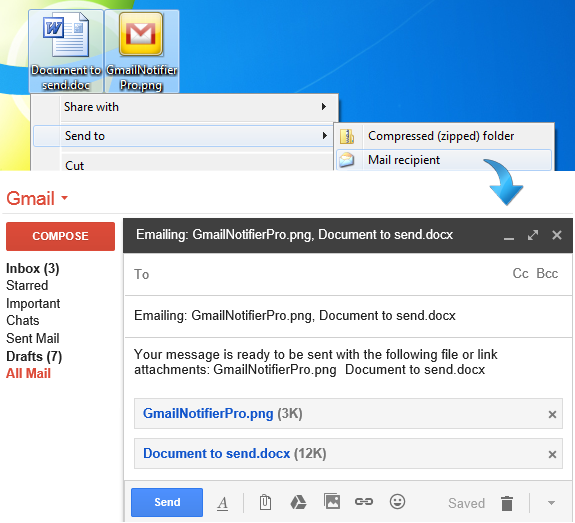
Gmail Notifier Pro can be registered as default program for e-mail in Windows. When registered as default e-mail program in Windows, the task of sending e-mail attachments from Windows, Office or any other applications becomes easy.
The screenshot illustrates the Send To feature that is available for all files and folders in Windows. By selecting one or many files, selecting Send To - Mail recipient, Gmail Notifier Pro Gmail can be opened in the web browser with a new message prepared, including the selected files as attachments. This integration increases the productivity for Gmail users.
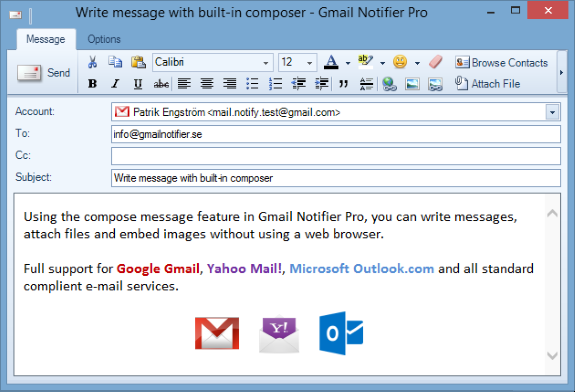
Gmail Notifier Pro also have a built-in e-mail composer that can be used for sending messages. The Send To feature can either be used with Gmail in the web browser or the Gmail Notifier Pro composer.
Gmail Notifier Pro also supports mailto-link integration, and can either launch the Gmail composer or the Gmail Notifier Pro composer when a mailto-link is clicked.
Supports 32-bit & 64-bit Windows XP, Windows Vista, Windows 7, Windows 8 and Windows 10.
Gmail Notifier Pro can can be used as an e-mail client, with support for all common message operations, including send e-mail, reply, preview and save attachments, mark as read or delete messages.
The screenshot illustrates the e-mail message composer in Gmail Notifier Pro.
Gmail Notifier Pro has preconfigured settings for all major e-mail service providers, making it easy to get started. Gmail Notifier Pro can also be used with any standard IMAP or POP mail server. For Google, messages can be accessed using Atom in addition to IMAP.
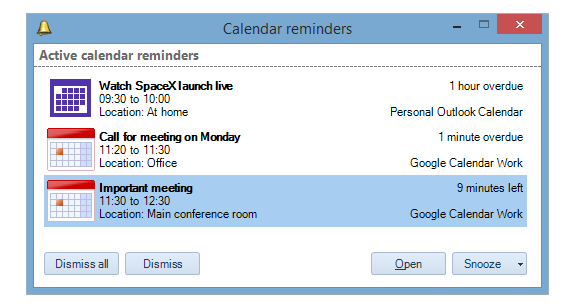
Gmail Notifier Pro can connect to Google Calendar and Microsoft Outlook.com Calendar in order to get information about calendar events and display reminders.
The screenshot illustrates the calendar reminders. These reminders will popup on the Windows desktop to notify about the events.